The Architecture of Experience

Designing exhibitions as immersive brand experiences — Varun Srivastava, Group Leader

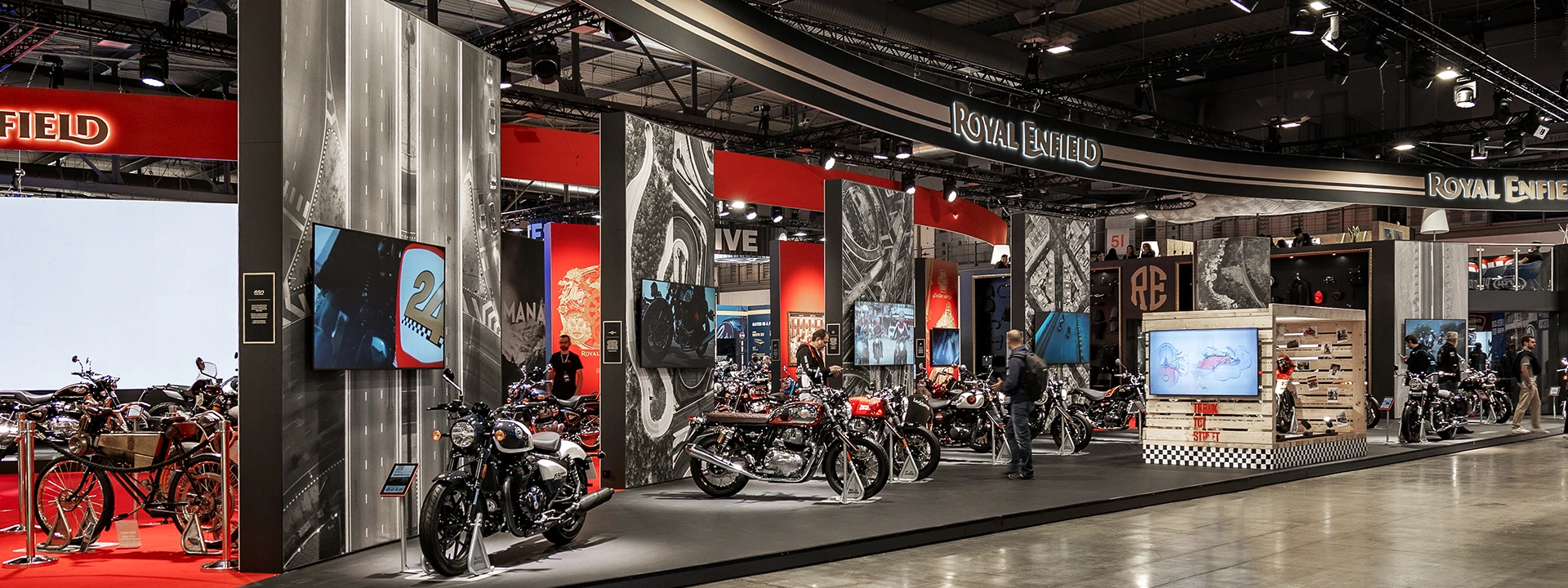
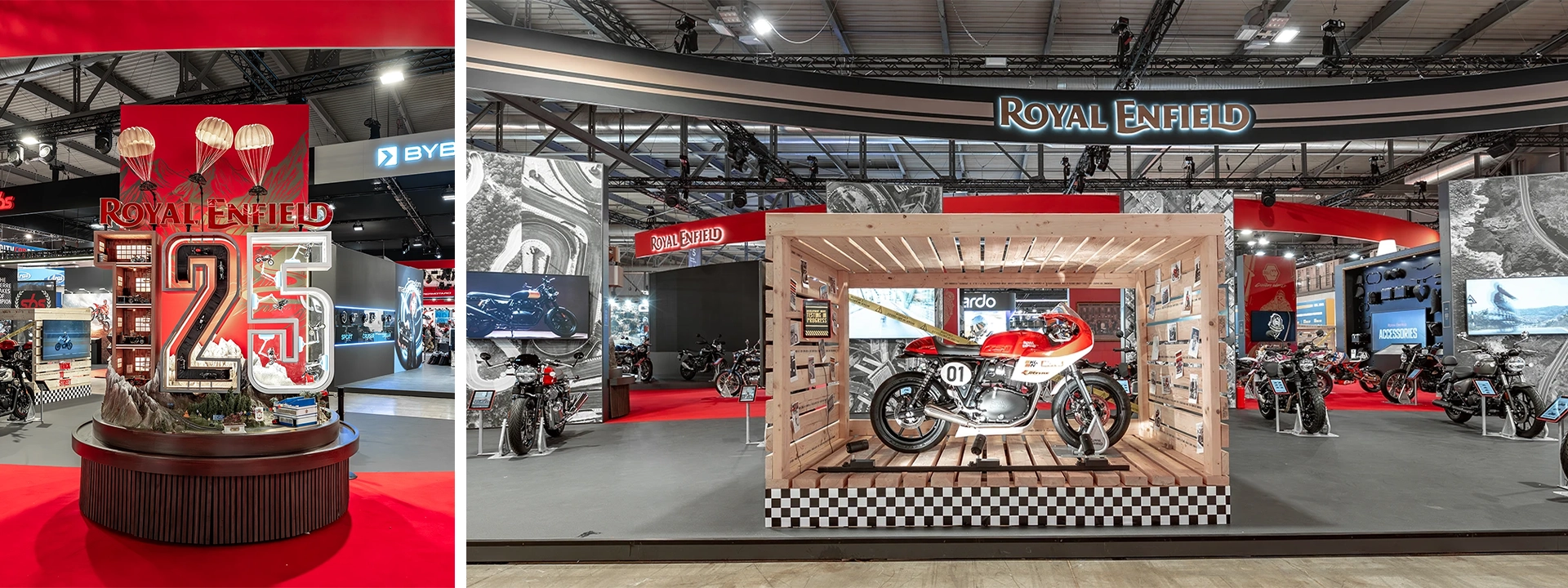
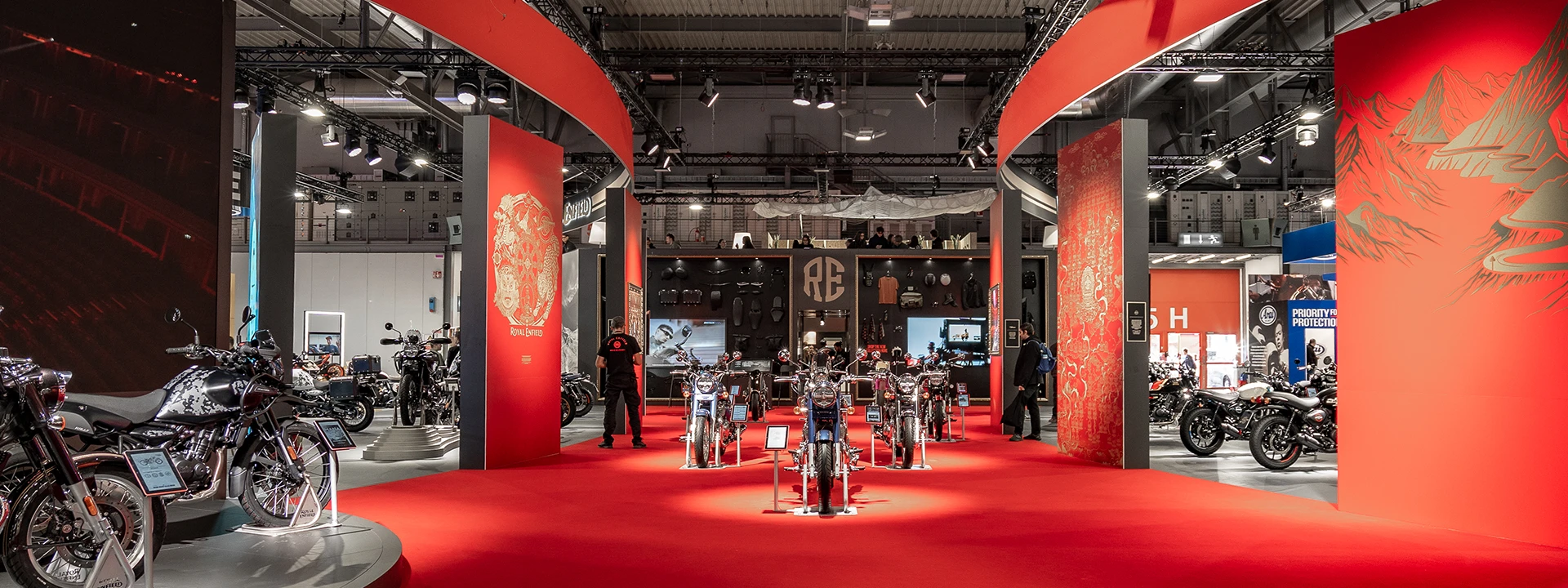
Working on the Royal Enfield exhibition space for EICMA 2025, the world's premier annual trade show for the two-wheeler industry, in Milan was a great reminder of something fundamental — architecture is about creating an experience. The brief was to design a 3,000 sq.ft pavilion to display forty motorcycles — upgrades, new launches, and EV prototypes — while marking the brand’s 125-year milestone. The space had to balance legacy with innovation and efficiently guide 2,000–3,000 visitors each day, within the intensity of a global motor show. <rt-red>The challenge was to create an essence of architecture without its physical permanence — the ability to move someone, to tell a story through space, material, and light.<rt-red>

Unlike a building, an exhibition exists for a moment. Transient, almost like theatre — its success is measured not in longevity but in impact. Yet the process behind it demands the same rigour as any architectural project: <rt-red>understanding context, audience, narrative, and brand identity.<rt-red>

What fascinated us most was how the scale shifted; how, within a few thousand square feet, we had to evoke a world much larger than the space itself. <rt-red>The challenge was to distil Royal Enfield’s evolving design philosophy into an experience that felt both immersive and authentic,<rt-red> the creation of a tactile, human connection with the brand’s story.

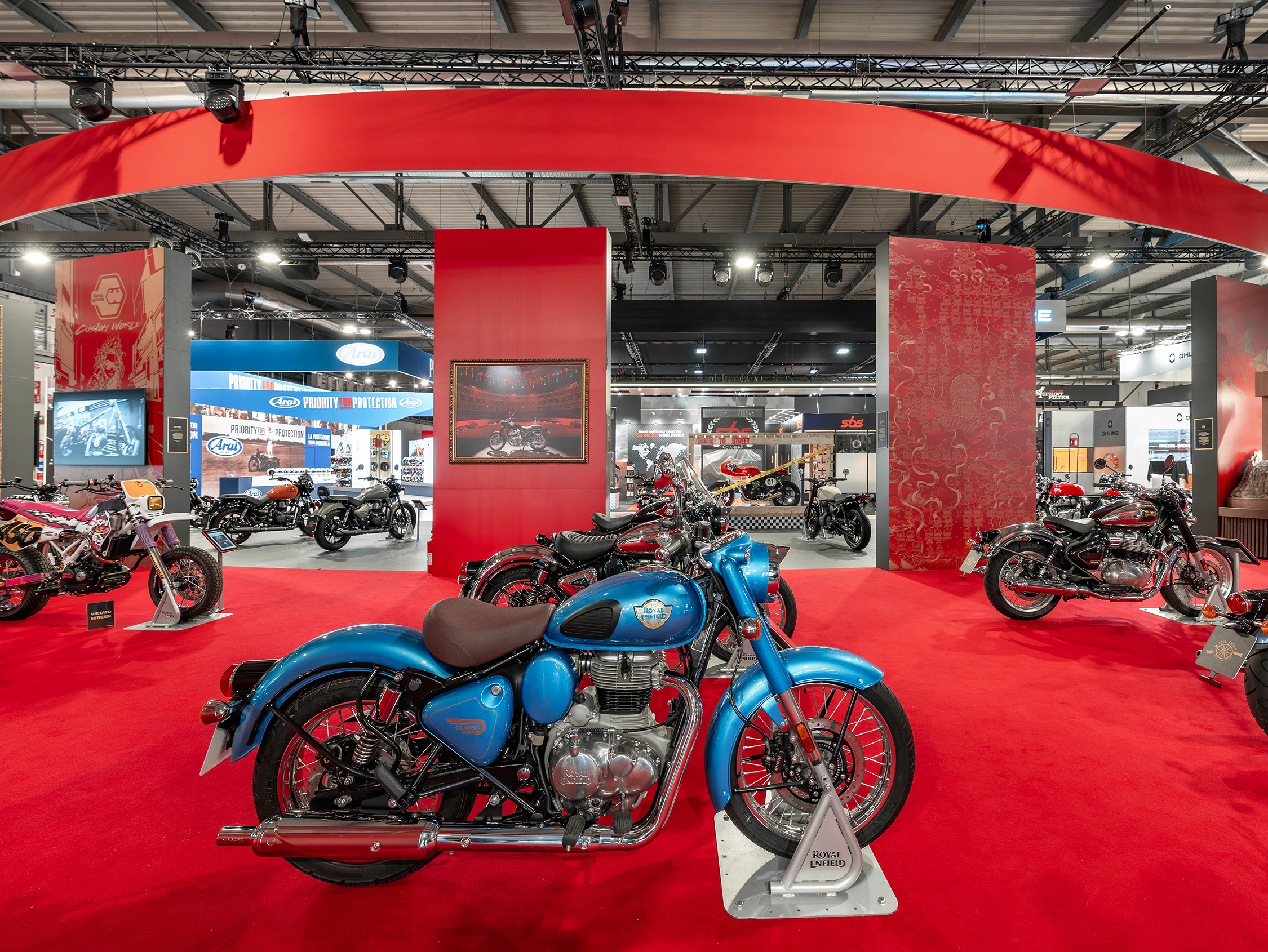
We imagined an ‘inner sanctum’ — an immersive core wrapped entirely in Royal Enfield’s signature red. <rt-red>It became the emotional centre of gravity, pulling visitors inward from the busy fairground<rt-red>. It held a curated selection of motorcycles arranged as a <rt-red>‘convoy’ — a subtle, kinetic metaphor that echoed Royal Enfield’s enduring legacy of riding and the culture of journeys that defines the brand.<rt-red>

This central spine with its five-metre-tall red totems that rose almost like markers in a ceremonial procession, carried brand graphics held within golden frames, charting the brand’s 125-year evolution. The floor carried a continuous timeline, anchoring visitors in a narrative that was both tactile and atmospheric. Seen together, they created a singular axis of arrival — a moment where the noise of the hall dissolved and Royal Enfield’s world took over.

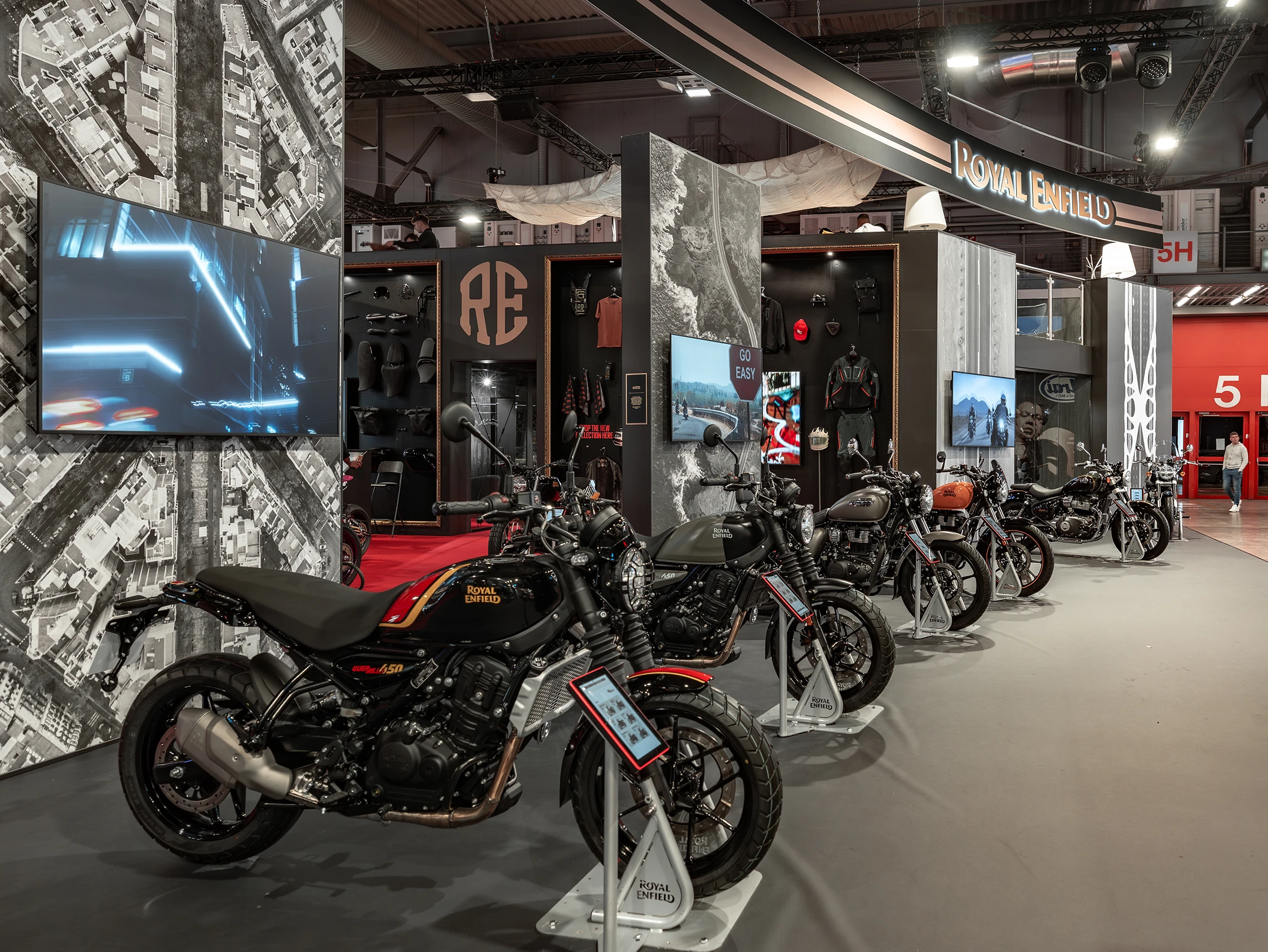
Moving outwards, the peripheral zone shifted to calm greys — a neutral canvas for the newly launched motorcycles with background  panels that carried contextual graphics like aerial road networks, rugged landscapes, and city grids — subtle prompts that immediately situated each motorcycle in its intended world. 

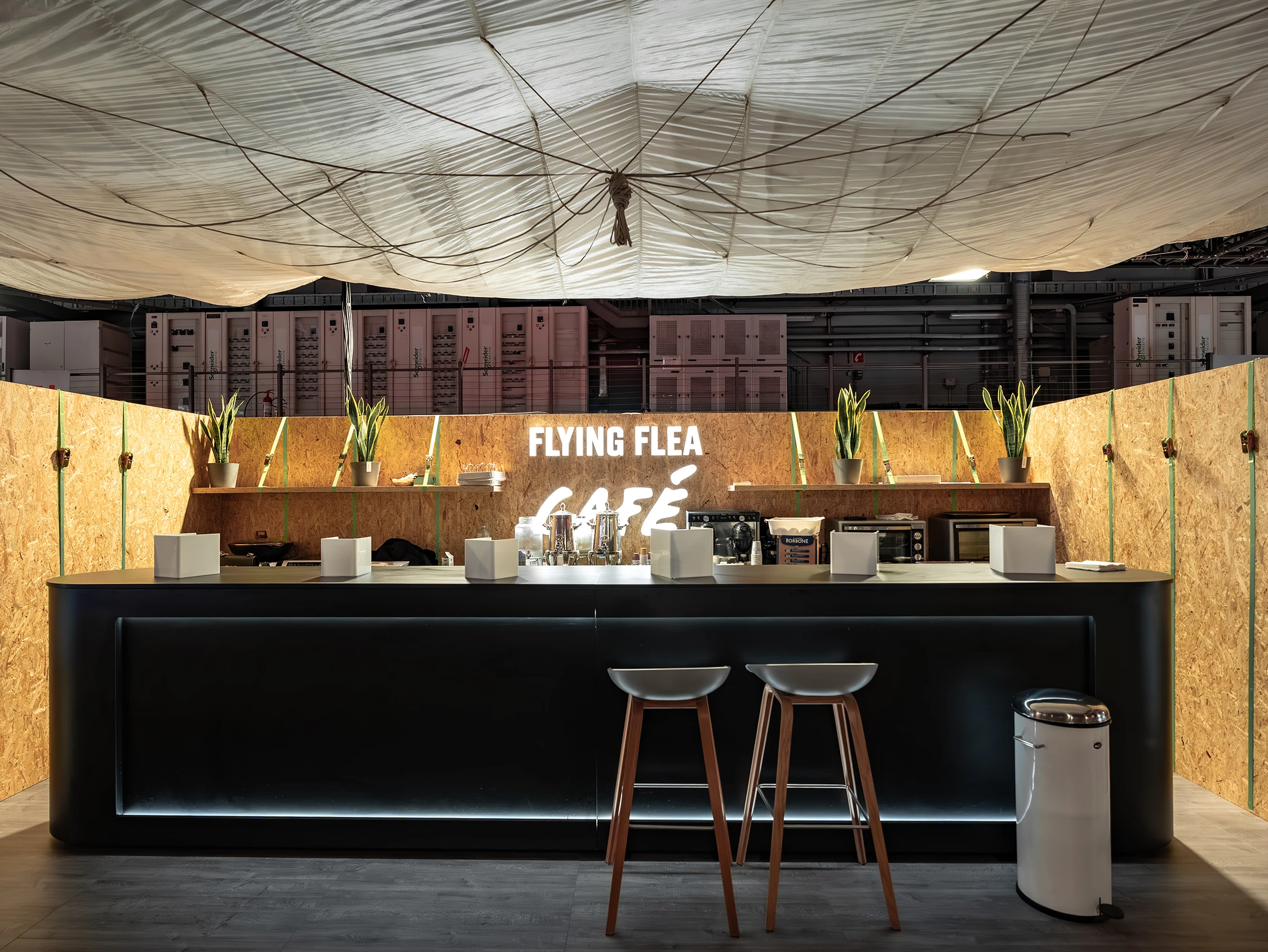
Towards the rear, lay the retail space and the Flying Flea café — an anchor for Royal Enfield’s EV sub-brand. Its teal palette and futuristic graphic language created a thoughtful counterpoint to the heritage-heavy sanctum, allowing past, present, and future to sit within a single spatial conversation.

In every sense, the project mirrors how we approach architecture at Studio Lotus. Whether we are designing a hotel in the hills or a workplace in the city, the question remains the same: <rt-red>how should this space make you feel?<rt-red> The tools might differ — structure, light, material, sound — but the intent stays consistent. <rt-red>Architecture is, regardless of scale or permanence, an act of storytelling whose real power lies not in what it constructs but in what it evokes.<rt-red> Eventually, whether it stands for a decade or a day, a space is successful when it leaves behind a memory — not just an impression.

Attached Projects